





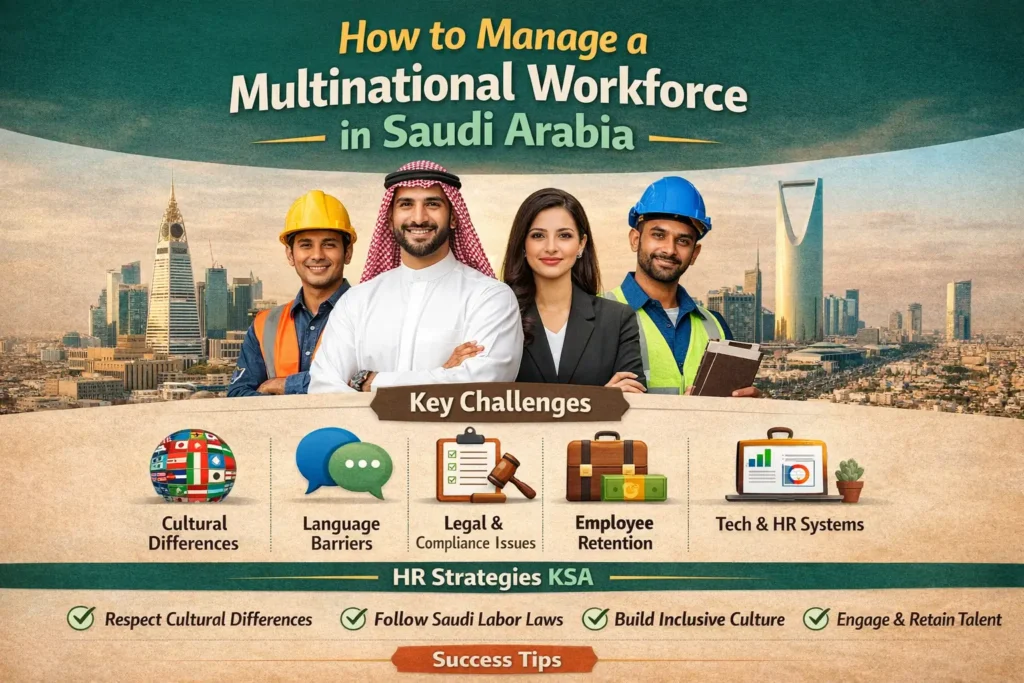
Managing a multinational workforce in Saudi Arabia isn’t just about HR policies. It’s about people, cultures, expectations, and constant adaptation.
If you’ve ever worked with teams from different countries, you already know this: what works for one group can fail badly for another.
I’ve seen companies struggle with simple things—like communication tone or work schedules—only to realize later that cultural differences were the real issue, not performance.
So how do you actually make it work in Saudi Arabia (KSA), where the workforce is one of the most diverse in the world?
Let’s break it down.
Understanding the Multinational Workforce Landscape in Saudi Arabia
Saudi Arabia hosts millions of foreign workers. According to reports from Statista, expatriates make up over 70% of the private sector workforce. That’s huge.
You’re not just managing employees. You’re managing:
- Different languages
- Different work ethics
- Different expectations from leadership
- Different cultural norms
This is why workforce management in Saudi Arabia requires a unique approach.
Key Workforce Demographics
| Category | Details |
| Local Employees | Saudi nationals (Saudization focus) |
| Expat Workers | India, Pakistan, Philippines, Egypt, Bangladesh |
| Skill Levels | From labor to highly skilled professionals |
| Languages | Arabic, English, Urdu, Hindi, Tagalog |
This mix creates both opportunity and complexity.
Key Challenges in Managing Foreign Workers in KSA
Let’s be honest. Managing international employees sounds exciting, but it comes with real challenges.
1. Cultural Differences
In some cultures, questioning a manager is normal. In others, it’s seen as disrespect.
Example:
A Western employee may speak directly in meetings.
A South Asian employee might stay quiet—even if they disagree.
If you don’t recognize this, you may misjudge confidence or competence.
2. Language Barriers
Even if English is the company language, not everyone is fluent.
This leads to:
- Misunderstandings
- Safety risks (especially in construction)
- Reduced productivity
3. Legal and Compliance Issues
Saudi labor laws are strict—and constantly evolving.
To manage foreign workers in KSA, you must handle:
- Work permits (Iqama)
- Sponsorship rules
- Saudization quotas
- Employment contracts
Missing compliance can lead to fines or business disruption.
4. Workforce Expectations
Different groups expect different things.
For example:
- Western employees value flexibility
- South Asian workers may prioritize job security
- Local Saudi employees often expect career growth and benefits
Balancing these expectations is not easy.
5. Employee Retention
High turnover is common in multinational teams.
Why?
- Homesickness
- Better offers
- Poor workplace integration
This is one of the biggest workforce challenges in Saudi Arabia.
Effective HR Strategies in KSA for Multinational Teams
Now let’s talk solutions. What actually works?
1. Build a Strong Onboarding System
First impressions matter.
A good onboarding program should include:
- Cultural orientation
- Clear job expectations
- Communication guidelines
- Legal awareness
I once worked with a company that reduced employee turnover by 30% just by improving onboarding.
2. Invest in Cross-Cultural Training
This is not optional anymore.
Train both managers and employees to:
- Understand cultural differences
- Avoid misunderstandings
- Communicate respectfully
Think of it like this:
You’re not changing people. You’re helping them understand each other.
3. Create Clear Communication Channels
When managing international employees in Saudi Arabia, clarity beats complexity.
Use:
- Simple English
- Visual instructions (especially for labor roles)
- Regular check-ins
Also, encourage feedback—but make it safe to share.
4. Localize Your HR Policies
A global HR policy won’t always work in KSA.
You need to align with:
- Saudi labor laws
- Cultural expectations
- Religious practices
For example:
- Adjust work hours during Ramadan
- Respect prayer times
These small adjustments build trust.
5. Use Technology for Workforce Management
Modern tools can simplify workforce management in Saudi Arabia.
Examples:
- HR software for attendance and payroll
- Communication platforms for team updates
- Performance tracking systems
According to a PwC Middle East report, companies using digital HR tools saw improved productivity and reduced errors.
Managing Cultural Diversity Effectively
This is where most companies either succeed—or fail.
Practical Tips That Actually Work
- Celebrate cultural diversity (national days, events)
- Avoid favoritism toward any nationality
- Encourage team collaboration across cultures
- Train managers to handle diversity
A Real Example
One company created mixed-nationality teams instead of grouping workers by country.
Result?
- Better collaboration
- Less conflict
- Higher productivity
Simple idea. Big impact.
Compliance and Legal Framework in Saudi Arabia
You can’t ignore this part.
Key Legal Areas to Focus On
- Labor Law compliance
- Saudization (Nitaqat program)
- Employment contracts
- Working hours regulations
Why It Matters
Non-compliance can lead to:
- Heavy fines
- Visa restrictions
- Business suspension
To manage foreign workers in KSA, staying updated is critical.
Building a Strong Company Culture
Culture is your secret weapon.
When done right, it reduces friction between different nationalities.
How to Build It
- Define clear company values
- Treat all employees fairly
- Encourage teamwork
- Recognize achievements
A strong culture makes employees feel included—even far from home.
Performance Management Across Cultures
Not everyone responds to feedback the same way.
What Works
- Be clear and direct—but respectful
- Set measurable goals
- Provide regular feedback
What to Avoid
- Public criticism (can backfire in some cultures)
- Vague expectations
- One-size-fits-all evaluations
Employee Engagement Strategies
Keeping employees engaged is half the battle.
Proven Methods
- Offer career development opportunities
- Provide incentives and bonuses
- Create a safe work environment
- Encourage open communication
According to Gallup, engaged teams show 21% higher profitability.
Future Trends in Workforce Management in Saudi Arabia
Things are changing fast.
Key Trends
- Increased Saudization
- Digital HR transformation
- Focus on employee well-being
- Remote and hybrid work models
If you’re managing a multinational workforce in Saudi Arabia, staying ahead of these trends matters.
Quick Checklist for Managing a Multinational Workforce
Use this as a quick reference:
✔ Understand cultural differences
✔ Ensure legal compliance
✔ Improve communication systems
✔ Invest in training
✔ Build inclusive company culture
✔ Use HR technology
✔ Focus on employee engagement
Conclusion
Managing a multinational workforce in Saudi Arabia is not simple—but it’s absolutely manageable with the right approach.
It comes down to a few key things:
- Understand your people
- Respect cultural differences
- Stay compliant with local laws
- Communicate clearly
- Build trust over time
Here’s the truth.
You won’t get everything right on day one. No company does.
But if you stay consistent and keep learning, your workforce won’t just function—it will thrive.
And when that happens, your business grows with it.
