





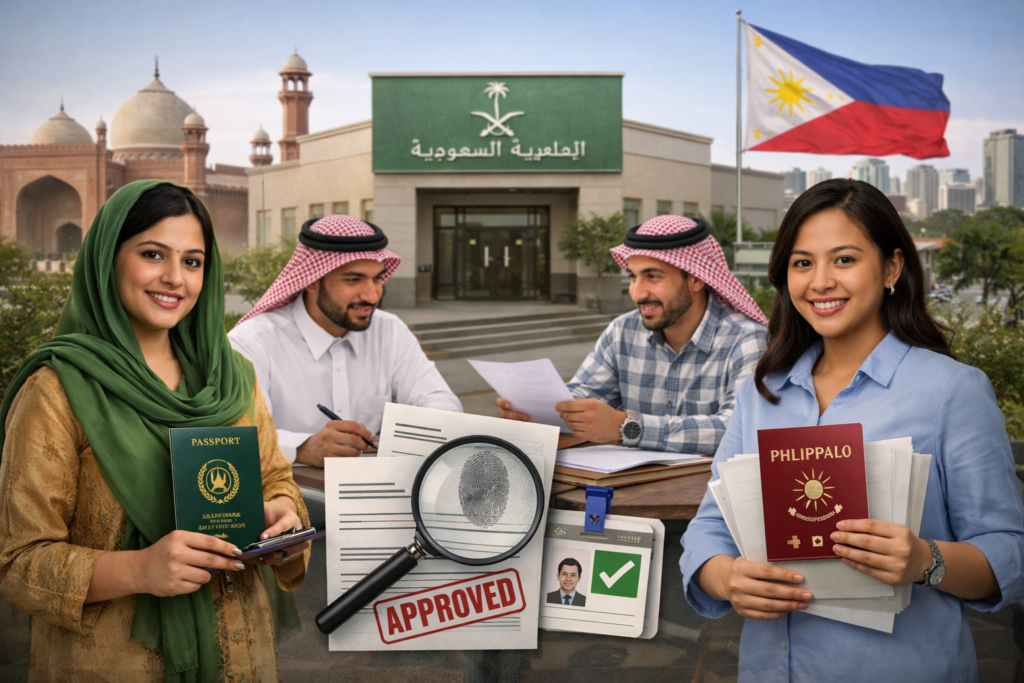
Hiring teachers for international schools in Saudi Arabia isn’t just about interviews and demo classes. One step quietly carries enormous weight: teacher credential verification.
School administrators often discover this the hard way. A resume may look impressive—degrees from well-known universities, years of experience, glowing references. Yet when verification begins, inconsistencies appear.
I’ve spoken with recruitment teams in Riyadh and Jeddah who say the same thing: verifying teaching qualifications from different countries requires different processes.
And two countries frequently appearing in Saudi recruitment pipelines are Pakistan and the Philippines.
This guide explains how teacher credential verification Pakistan Philippines processes differ, how to verify teaching degrees, and the correct way to authenticate Pakistani credentials or verify Filipino teaching license documentation.
Why Teacher Credential Verification Matters for Saudi Schools
Saudi Arabia hosts thousands of international schools and private institutions. According to data from the Saudi Ministry of Education, the number of private schools in the Kingdom exceeds 8,000 institutions, many of which recruit teachers internationally.
This creates a real challenge.
Administrators must ensure:
- Degrees are legitimate
- Teaching licenses are valid
- Documents match government records
- Qualifications meet visa requirements
A single oversight can cause serious problems later, including:
- visa rejections
- compliance issues with the Saudi Ministry of Education
- reputational damage for the school
That’s why teacher certification verification is now a standard step before finalizing employment contracts.
Understanding Teacher Credential Verification
At its core, teacher credential verification means confirming that a teacher’s academic qualifications and teaching licenses are authentic and valid.
It usually involves three checks:
1. Academic Degree Verification
Schools confirm that the degree was issued by an accredited institution.
2. Teaching License Verification
Some countries require teachers to pass professional exams before practicing.
3. Document Authentication
Certificates are validated through official authorities and embassies.
Recruitment teams often use tools like:
- teacher credential lookup
- teacher certification verification systems
- direct university confirmation
- national licensing databases
But here’s where things become interesting.
The verification process is very different for Pakistani and Filipino teachers.
Teacher Credential Verification in Pakistan
Pakistan produces a large number of qualified teachers working across the Middle East. However, verifying Pakistani credentials requires several steps because academic oversight is centralized through government bodies.
Step 1: Verify the Teaching Degree
To verify teaching degrees issued in Pakistan, schools often check accreditation through the Higher Education Commission (HEC).
HEC maintains the official database of recognized universities.
Typical verification includes:
- Bachelor of Education (B.Ed)
- Master of Education (M.Ed)
- Bachelor’s degrees in subject areas
Recruiters usually request:
- degree copy
- transcripts
- HEC attestation
Without HEC verification, most Saudi embassies will not accept the document.
Step 2: Authenticate Pakistani Credentials
The process to authenticate Pakistani credentials typically follows this order:
- University verification
- HEC attestation
- Ministry of Foreign Affairs Pakistan stamp
- Saudi Embassy legalization
Only after this chain is completed will the document be accepted for work visas.
From a practical perspective, many HR managers in Gulf schools say HEC attestation is the most critical step.
Step 3: Teaching Experience Verification
Saudi schools often request confirmation letters from previous employers.
These letters help verify:
- years of teaching
- subject taught
- school registration
In many hiring cases, HR teams also conduct teacher credential lookup checks by contacting institutions directly.
Teacher Credential Verification in the Philippines
The Philippines has one of the largest populations of overseas teachers in the world. Filipino educators work in the UAE, Qatar, Saudi Arabia, and across Asia.
What makes Filipino teacher verification different is the national licensing system.
Teachers must pass the Licensure Examination for Teachers (LET) to legally teach.
Step 1: Verify Filipino Teaching License
To verify Filipino teaching license, recruiters use the Professional Regulation Commission (PRC) database.
The PRC maintains an official teacher certification verification system.
Verification includes:
- license number
- teacher’s name
- exam date
- license status
This system makes verification relatively quick.
In fact, many HR officers say Filipino credentials are easier to verify compared to many other countries.
Step 2: Verify Teaching Degrees
Filipino teachers usually hold degrees such as:
- Bachelor of Elementary Education (BEEd)
- Bachelor of Secondary Education (BSEd)
Universities are accredited by the Commission on Higher Education (CHED).
Recruiters typically:
- request transcripts
- confirm university accreditation
- cross-check PRC license
This process ensures the teacher has both academic and professional credentials.
Pakistan vs Philippines: Key Differences
The biggest difference between the two systems lies in licensing and verification infrastructure.
| Factor | Pakistan | Philippines |
| Teaching License | Not always mandatory | Mandatory (PRC license) |
| Degree Verification | HEC attestation required | University + CHED verification |
| National Database | Limited public lookup | PRC online verification |
| Verification Speed | Moderate to slow | Faster |
From a recruiter’s perspective, Filipino teacher verification tends to be more straightforward, while Pakistani credential authentication involves more document attestation steps.
Practical Scenario: A Saudi School Hiring Two Teachers
Let’s imagine a typical situation.
A school in Riyadh is hiring two mathematics teachers.
Candidate A: Pakistan
Candidate B: Philippines
Pakistani Candidate Verification
The HR team must:
- confirm university recognition through HEC
- ensure degree attestation
- authenticate documents via embassy
This may take 2–4 weeks.
Filipino Candidate Verification
The HR team simply:
- checks the PRC license database
- confirms the degree with the university
This can often be completed in a few days.
That’s a real-world difference many hiring managers notice.
Common Mistakes Schools Make During Credential Verification
Even experienced recruitment teams sometimes skip important checks.
Here are the most common mistakes:
1. Accepting Unverified Degree Copies
Always confirm degrees with official authorities.
2. Ignoring Teaching Licenses
Some teachers may have expired licenses.
3. Skipping Embassy Authentication
Saudi visa processing requires authenticated documents.
4. Not Performing Teacher Credential Lookup
Many institutions provide online verification systems.
Best Practices for Saudi School Administrators
To make teacher credential verification Pakistan Philippines smoother, schools can adopt a structured approach.
Recommended Verification Workflow
- Request digital copies of all credentials
- Perform teacher certification verification checks
- Confirm university accreditation
- Verify teaching license where required
- Authenticate documents via embassies
Keeping a checklist dramatically reduces hiring risks.
Helpful Tools for Credential Verification
Recruiters frequently rely on several verification tools:
- teacher credential lookup databases
- national teacher licensing systems
- university registrar offices
- third-party background verification companies
These tools make it easier to verify teaching degrees and confirm professional licenses.
Expert Insight from International School Recruiters
Several recruitment agencies working in the Gulf report a similar trend.
According to global teacher recruitment studies from TES Global, international schools increasingly prioritize verified credentials before interviews even begin.
One recruiter told me:
“Ten years ago we checked credentials after hiring. Now verification happens before the job offer.”
This shift reflects growing compliance standards across Gulf education systems.
Final Thoughts
For Saudi schools recruiting international teachers, teacher credential verification is no longer optional. It’s a necessary safeguard.
Understanding how to verify teaching degrees, authenticate Pakistani credentials, and verify Filipino teaching license documentation can save schools from costly hiring mistakes.
The key takeaways:
- Pakistani credential verification often requires HEC attestation and embassy legalization
- Filipino teachers must hold a PRC teaching license
- Online verification tools simplify the process
- A structured verification workflow protects schools and students
In international education, qualifications matter. But verified qualifications matter even more.
And for any Saudi school aiming to maintain high teaching standards, careful credential verification is the first step toward building a trustworthy faculty.
