




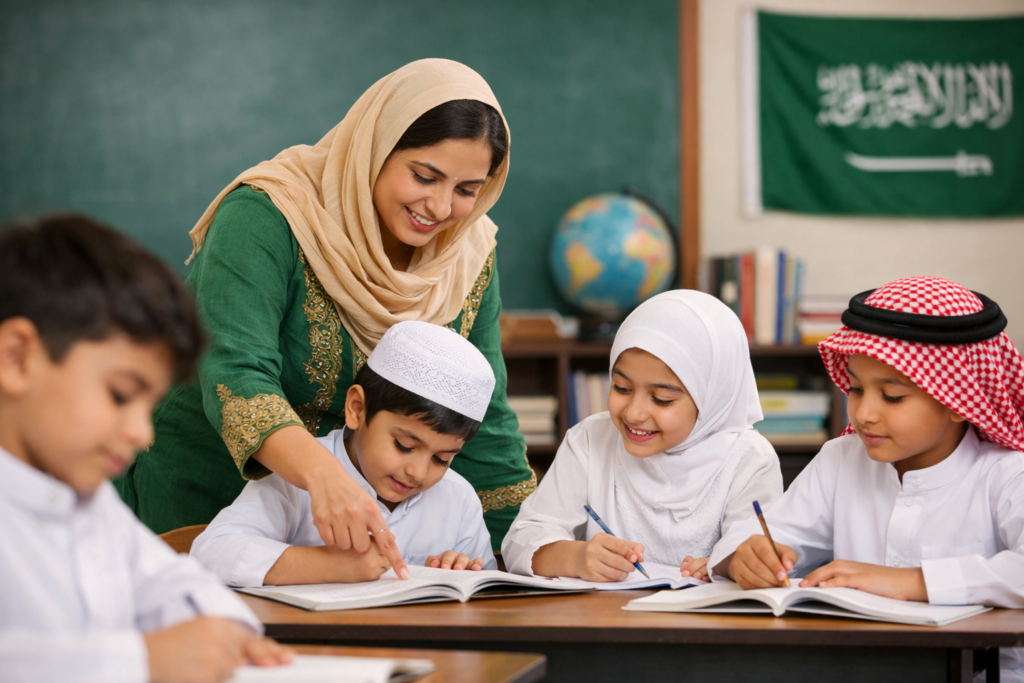
Why Pakistani Teachers Excel in Saudi Arabian International Schools: International education is expanding rapidly in Saudi Arabia. New private and international schools open each year to serve a growing expatriate and local student population. As a result schools constantly search for qualified educators who can meet international standards while maintaining cultural harmony.
Many recruiters now show a strong preference for Pakistani educators. Their reputation for academic excellence, strong communication skills, and effective classroom management makes them a reliable choice for international institutions.
This guide explains why Pakistani teachers perform exceptionally well in Saudi international schools. It also highlights the qualities that make them valuable for long-term teacher recruitment.
1. Education System and Teacher Training in Pakistan
2.1 Strong Academic Background
Pakistan produces thousands of graduates every year in education and subject-specific disciplines such as English, mathematics, and science. Many teachers complete specialized degrees that emphasize modern pedagogical approaches, effective instructional methods, and evidence-based educational strategies.
Universities also emphasize curriculum development and structured assessment methods. These elements prepare educators to maintain high academic performance among students.
Teachers often work in diverse classrooms before going abroad. This experience builds strong adaptability skills and encourages multicultural awareness, which is extremely useful in international schools.
Pakistani educators also focus heavily on skill development among students. Lessons typically combine theory with real-world application. As a result students benefit from practical learning rather than memorization alone.
2.2 Professional Teaching Certifications
Professional credentials play a major role in teacher success. Many Pakistani educators hold B.Ed or M.Ed degrees along with specialized training in professional development and classroom leadership.
Teacher training programs frequently include modules on:
- Modern instructional strategies
- Student-centered engagement techniques
- Effective behavior management
- Structured performance evaluation
Continuous learning remains part of the profession. Many educators join workshops and mentorship programs to improve teaching quality.
Schools also encourage experience sharing among teachers. This collaboration spreads best practices across departments and improves the overall learning environment.
3. English Language Proficiency
3.1 English as a Primary Medium of Instruction
English serves as a major language of instruction in Pakistan’s higher education system. Universities conduct lectures, research, and assessments primarily in English.
This background helps teachers deliver lessons with clarity. Strong communication skills also support effective building relationships with students and parents.
Pakistani educators often promote bilingual education, allowing students to develop both English proficiency and cultural awareness. This ability proves useful in schools with diverse international populations.
Teachers also apply structured engagement strategies and creative motivational techniques to keep lessons interactive and effective.
3.2 Compatibility with International Curricula
Many Pakistani teachers have experience teaching British, American, or IB programs. This exposure helps them understand global international standards and adapt their educational strategies accordingly.
They also incorporate modern teaching models such as:
- Blended learning environments
- Interactive digital platforms
- Project-based interactive learning
Through these methods students remain active participants rather than passive listeners.
Teachers frequently refine lessons through continuous evaluation techniques and thoughtful student assessment processes. This approach ensures that learning objectives remain clear and measurable.
4. Cultural Compatibility with Saudi Arabia
4.1 Shared Cultural and Religious Values
Cultural compatibility plays a crucial role in international hiring. Pakistani teachers generally integrate easily into Saudi society because they share many social and religious traditions.
This familiarity supports smooth cultural integration within school communities. It also improves multicultural education by helping students understand diverse perspectives within similar cultural frameworks.
Teachers often encourage social-emotional learning to promote empathy, respect, and personal responsibility among students.
4.2 Smooth Integration into School Communities
Pakistani educators usually adapt quickly to local school environments. Their strong interpersonal skills allow them to collaborate with colleagues and administrators.
They also emphasize parent involvement, which strengthens trust between families and schools.
Many teachers actively participate in after-school programs and extracurricular activities. These programs help students develop confidence and leadership skills outside the classroom.
Such initiatives often lead to inspiring success stories and long-term alumni success among students.
5. Classroom Management and Teaching Style
5.1 Strong Discipline and Classroom Control
One major strength of Pakistani educators lies in effective classroom management. Teachers maintain structured learning environments while encouraging respectful behavior.
They implement positive discipline systems based on positive reinforcement rather than strict punishment.
Practical behavior management techniques help students stay focused and motivated during lessons.
Teachers also apply organized management skills to handle classroom tasks, schedules, and academic planning efficiently.
5.2 Student-Focused Teaching Approach
Pakistani teachers prioritize active learning. They frequently apply engagement techniques and collaborative discussions to keep students involved.
Common classroom strategies include:
- Group projects using collaborative teaching methods
- Technology-supported interactive learning
- Creative assignments using personalized learning models
Teachers also encourage peer collaboration to help students learn from one another.
Many educators integrate support services and academic support systems for students who need extra assistance.
This approach improves student engagement and encourages lifelong learning habits.
6. Cost-Effective Recruitment for Schools
6.1 Competitive Salary Expectations
International schools often operate within tight budgets. Pakistani teachers offer a strong balance between quality and affordability.
Schools gain access to highly trained professionals with proven instructional strategies and strong management skills without significantly increasing payroll expenses.
Many educators also bring valuable educational resources and innovative teaching ideas to their classrooms.
6.2 Long-Term Employment Stability
Another advantage is employment stability. Pakistani teachers frequently stay longer in their roles compared with many expatriate educators.
Long-term retention strengthens academic programs and improves school culture.
Teachers who remain for several years often participate in internal mentorship programs. They guide new staff members and share practical teaching insights.
This process strengthens institutional knowledge and promotes consistent best practices.
7. Subjects Where Pakistani Teachers Perform Best
Pakistani educators show strong performance across several academic fields. Their academic training supports high-quality teaching in subjects such as:
English Language and Literature
Teachers emphasize structured reading programs, creative writing activities, and strong student assessment techniques.
Mathematics
Lessons focus on problem solving and logical reasoning. Teachers often integrate instructional methods that encourage analytical thinking.
Science (Physics, Chemistry, Biology)
Science educators emphasize experiments and assessment methods that measure conceptual understanding.
IT and Computer Studies
Technology instructors introduce digital learning tools and promote blended learning environments.
Across all subjects teachers maintain a strong commitment to inclusive education, ensuring every student receives equal opportunities to succeed.
8. Recruitment Process for Hiring Pakistani Teachers
8.1 Where to Find Qualified Candidates
Schools looking to hire Pakistani educators can explore several recruitment channels.
Common sources include:
- International teacher recruitment agencies
- Education job portals
- University alumni networks
- Professional teaching communities
Many institutions also rely on referral systems built through building relationships with trusted educators.
These networks often produce highly skilled candidates with strong professional reputations.
8.2 Visa and Documentation Requirements
Recruitment also involves verifying credentials and completing legal procedures.
Typical documentation includes:
- Attested academic degrees
- Verified teaching experience
- Professional licenses and training certificates
Schools should also conduct detailed performance evaluation during interviews. Demonstration lessons can reveal teaching ability and classroom leadership.
These steps ensure educators meet required international standards before joining the school.
9. Challenges Schools Should Consider
Despite many advantages recruitment still requires careful planning.
One challenge involves credential verification. Schools must ensure all qualifications are legitimate and recognized.
Another factor involves cultural orientation. Even with similar values teachers may still benefit from training in cultural awareness and local school policies.
Institutions should also provide access to strong academic support services and ongoing professional development opportunities.
Such preparation helps teachers adapt quickly and perform effectively.
10. Tips for Successful Teacher Recruitment
Schools can maximize hiring success by following a structured recruitment strategy.
Conduct structured interviews
Ask questions about classroom scenarios, assessment methods, and lesson planning.
Verify teaching demonstrations
Observation of trial lessons helps evaluate instructional strategies, engagement techniques, and student interaction.
Provide onboarding and training programs
New teachers benefit from orientation sessions and professional mentorship programs.
These initiatives improve confidence and encourage continuous skill development among staff members.
11. Future Demand for Pakistani Teachers in Saudi Schools
Saudi Arabia continues expanding its private education sector. International schools are increasing across major cities.
This growth creates strong demand for qualified expatriate teachers who understand global curricula and maintain high academic expectations.
Pakistani educators remain well positioned to meet this demand. Their strong training background, cultural compatibility, and dedication to student success make them ideal candidates.
As more success stories emerge from classrooms the reputation of Pakistani teachers continues to grow.
Conclusion
Pakistani teachers have earned a strong reputation in Saudi Arabian international schools. Their commitment to academic excellence, effective classroom management, and modern educational strategies makes them valuable assets for educational institutions.
They combine professional expertise with strong cultural understanding. This balance allows them to support students academically while building meaningful relationships within school communities.
For school administrators seeking reliable educators Pakistani teachers represent a practical and effective recruitment choice. Their experience, adaptability, and dedication to student success continue to strengthen international education across Saudi Arabia.
Frequently Asked Questions (FAQs)
1. Why do Pakistani teachers perform well in Saudi Arabian international schools?
Pakistani teachers often excel because of their strong academic training, English language proficiency, and effective classroom management skills. Many educators also have experience with international curricula, which helps them meet global educational standards.
2. Are Pakistani teachers qualified to teach international curricula?
Yes. Many Pakistani teachers hold professional qualifications such as B.Ed or M.Ed degrees and have experience teaching British, American, or IB curricula. Their training prepares them to apply modern instructional strategies and structured assessment methods.
3. Why do Saudi schools prefer hiring Pakistani teachers?
Saudi schools often prefer Pakistani teachers due to their strong work ethic, cultural compatibility, and cost-effective recruitment. They also adapt quickly to the school environment and maintain high levels of student engagement.
4. What subjects do Pakistani teachers commonly teach in Saudi international schools?
Pakistani educators frequently teach core academic subjects including:
- English Language and Literature
- Mathematics
- Physics, Chemistry, and Biology
- IT and Computer Studies
These subjects align with their strong academic background and teaching expertise.
5. How can schools recruit Pakistani teachers for international schools?
Schools can recruit qualified teachers through:
- International teacher recruitment agencies
- Online education job portals
- Professional teaching networks
- University graduate programs
Schools should also conduct structured interviews and teaching demonstrations before hiring.
